
Ask a business owner in Tanzania if they've experienced fraud, and a surprising number say no. Ask more specific questions, has stock ever come up short with no clear explanation, has a supplier invoice ever looked inflated, has a payment confirmation ever turned out to be fake, and the answer often changes fast. Fraud rarely gets labeled as fraud while it's happening. It gets labeled as a mistake, a misunderstanding, or bad luck, right up until the pattern becomes impossible to ignore.
Knowing the specific shape each type of fraud takes makes it much easier to recognize early. Here are the schemes that actually show up in Tanzanian businesses, not textbook examples from somewhere else.
Most businesses are exposed to two or three of these categories, not all of them equally. Reading through the full list and noting which ones actually match how your business operates is worth more than trying to defend against every possible scheme at once.
Procurement and vendor fraud
This is one of the most common categories we see, and one of the hardest to spot from the outside, since every individual transaction can look completely normal. A purchasing manager consistently favors one supplier regardless of price, and it later turns out they receive a personal kickback for every order placed. Or a "competing" supplier who bids against the usual vendor turns out to be run by the same person under a different company name, making the whole bidding process a formality rather than real competition.

This scheme survives because it hides in plain sight. Nothing about a single invoice looks wrong. It only becomes visible when someone maps buying patterns over several months and notices the same supplier winning every time, at prices that never quite match what else is available in the market.
The businesses that catch this early are usually the ones that rotate who reviews vendor selection, at least occasionally, rather than leaving the same person to approve the same suppliers indefinitely without anyone else ever double-checking the pattern. Our corporate investigations work often starts with exactly this kind of buying-pattern review.
Payroll and ghost employee fraud
Payroll fraud takes a few different shapes, but the classic version is the ghost employee, someone still drawing a monthly salary long after they've left the company, or in some cases, someone who never actually worked there at all. A payroll administrator with enough access can add a name to the list and route the salary to an account they control.

A quieter version involves overtime and allowance claims that don't match actual hours worked, padded gradually enough that no single month looks unusual. Businesses that don't regularly cross-check payroll headcount against actual staff physically present, or against HR's own records, are the ones most exposed to this, particularly if the same person has controlled payroll for years without anyone else reviewing it.
A simple, periodic headcount, physically confirming that every name on the payroll corresponds to a real person actually showing up to work, catches most of this category. It sounds almost too basic to matter, which is exactly why so many businesses skip it.
Invoice and billing fraud
This covers inflated invoices, duplicate billing for the same delivery, and invoices for goods or services that were never actually provided. It's especially common in businesses that don't carefully match every invoice against a physical delivery record before approving payment.

A variation worth watching for involves a legitimate vendor relationship being quietly hijacked. A fraudster intercepts communication, sometimes through a compromised email account, and sends updated "new bank details" for an upcoming payment. The invoice looks completely legitimate, the amount matches what was expected, and the business pays a real debt to the wrong account entirely. This has become more common as more business communication moves onto email and WhatsApp, where a convincing message is easy to fake.
A short verification call to a known, existing contact number before changing any payment details, never a number provided in the same message requesting the change, stops most of this category before any money moves. When a business already suspects this has happened, our forensic and financial investigations team can trace exactly where the payment actually went.
Inventory, stock, and agent fraud
For businesses that hold physical stock, this is often the most persistent leak. Warehouse staff skimming small quantities consistently enough to stay under the radar. Stock recorded as damaged, expired, or lost that was actually sold quietly through informal channels. In businesses that work through agents or wakala, an agent selling company stock at a discount to their own side customers and reporting the difference as spoilage or theft.

This category is particularly hard to catch through financial records alone, since the money side of the books can look fine even while stock quietly disappears. Physical reconciliation, actually counting what's on the shelf or in the warehouse against what the records say should be there, is usually the only thing that reliably catches it.
Unannounced spot checks matter more here than scheduled ones. A count everyone knows is coming gets prepared for. A count nobody expects shows the actual state of things, which is exactly the kind of unannounced walkthrough covered under our risk surveys and loss prevention service. If a pattern like this is starting to feel familiar, our guide on the signs of employee theft walks through how to confirm it before confronting anyone.
Mobile money and payment fraud
This one deserves its own category in Tanzania specifically, given how much business now runs through mobile money. A few patterns show up repeatedly. Fake payment confirmation messages, a customer or agent shows a screenshot of a transaction that was never actually completed, timed for a moment when the recipient can't immediately verify it against their own account.

SIM swap fraud is a more serious version, where a fraudster gains control of a phone number linked to a mobile money account, sometimes through a compromised agent or a social engineering trick, and drains the account before the real owner notices their SIM has stopped working. Agent-level fraud also shows up in businesses that rely on mobile money agents for collections, an agent recording a transaction as failed when it actually succeeded, then keeping the difference.
The common thread across all of these is speed. Mobile money moves fast, which is exactly what makes it useful and exactly what makes fraud against it hard to reverse once it's happened. Verifying a transaction directly through the mobile money provider's own system, rather than trusting a screenshot, closes most of this gap.
This is one of the fastest-evolving categories on this list. Schemes that were unheard of two years ago are now common enough that most business owners have at least heard a story about one. Staying current on the latest variations matters here more than in almost any other category.
Tender and bid-rigging fraud
For businesses that win contracts through a bidding process, whether from government tenders or larger corporate clients, collusion between bidders is a real and often overlooked risk. Multiple "competing" bids that are suspiciously similar, or a rotation where different companies take turns winning so each one gets a share over time, both point toward bidders coordinating behind the scenes rather than genuinely competing.
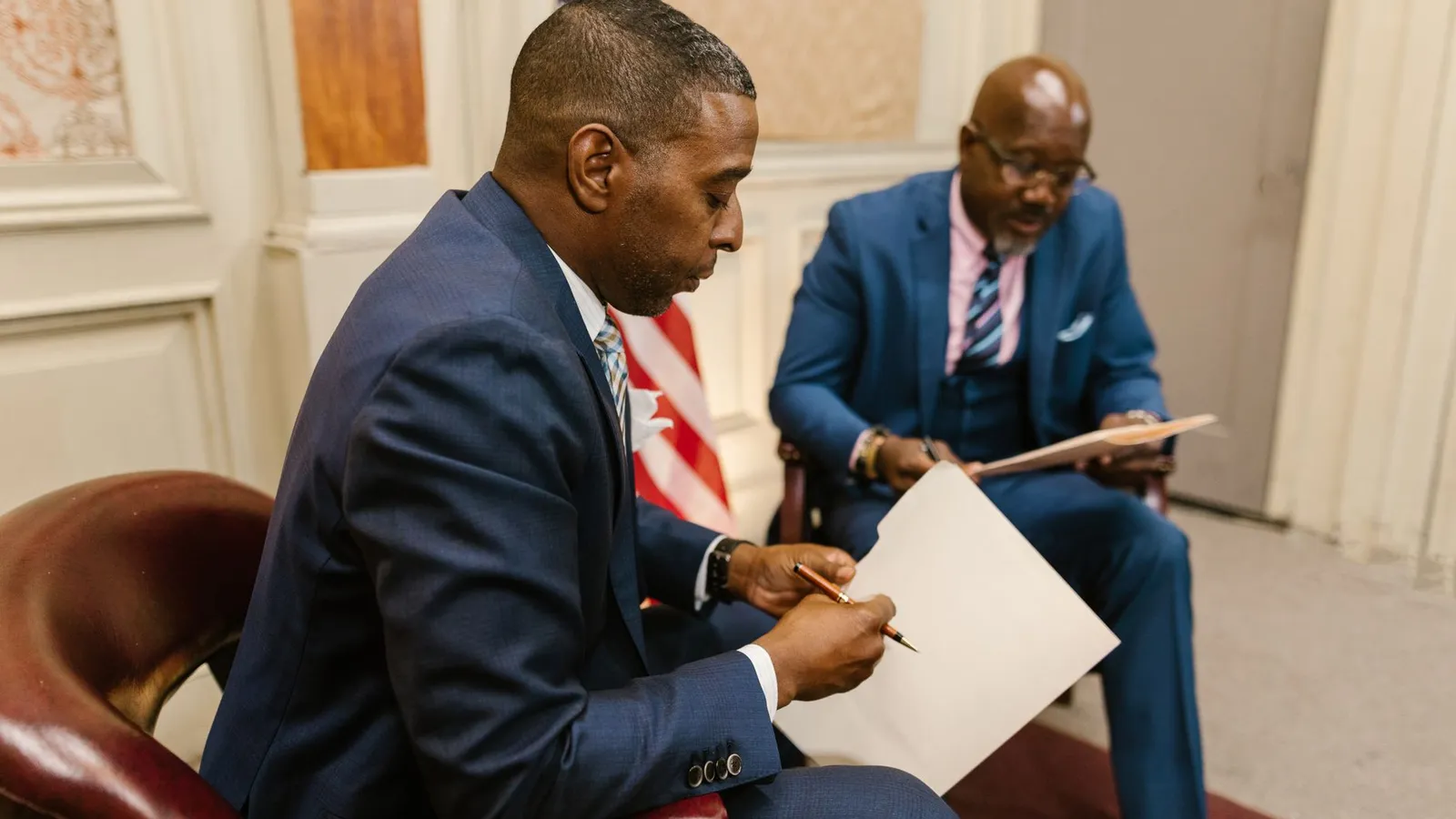
From the buyer's side, this often means paying more than a truly competitive process would produce. From a legitimate bidder's side, it can mean losing fair opportunities to a rigged process they have no visibility into. Spotting it usually requires comparing bid patterns across multiple tenders over time rather than looking at any single one in isolation, the same pattern-mapping we walk through in our guide on detecting and preventing business fraud.
This is a slower-burning fraud than most on this list, since the loss is spread thin across many transactions rather than concentrated in one obvious event. That's also what makes it so persistent once it takes hold. Nobody's out a large enough sum on any single tender to trigger an obvious alarm.
Frequently asked questions
Procurement and vendor fraud along with inventory and stock fraud tend to come up most often across the businesses we work with, largely because they're easy to hide inside routine, high-volume transactions. Mobile money fraud is close behind and growing quickly given how much day-to-day business now runs through it, especially among businesses collecting payments through agents or field staff.
Mainly speed and reversibility. A fraudulent bank transfer can sometimes be flagged or reversed within a window. A mobile money transaction is often final within seconds, which means detection has to happen before or during the transaction rather than after it, through direct verification with the provider rather than trusting a message or screenshot from the other party.
Not all at once, and it doesn't need to. The right approach is identifying which one or two categories actually apply to how your business operates, a business with heavy stock exposure should prioritize inventory controls, one that collects payments through agents should prioritize mobile money verification, rather than trying to build defenses against every category equally from day one.
A pattern that keeps getting explained away the same way. One unusual invoice or one stock discrepancy isn't evidence of anything on its own. The same explanation repeating month after month, for the same supplier, the same employee, or the same category of loss, is what's actually worth investigating rather than dismissing again.
Often together, more than people expect. A business with weak procurement oversight frequently has weak inventory controls too, since both usually trace back to the same underlying gap, one person controlling a process end to end with nobody else checking. Finding one type of fraud is a reasonable prompt to check the others rather than assuming the problem is fully contained.
Document the pattern quietly before confronting anyone, dates, amounts, and specifics rather than a general impression. From there, decide whether the situation needs an accountant to verify the numbers, an investigator to establish who's responsible and gather evidence, or both working together, which is often the fastest path to a resolution that actually holds up under scrutiny.
Recognizing the specific shape of a fraud scheme is most of the battle. The rest is verification, evidence, and knowing when to bring in outside help before the loss grows any further. Our guide on building a fraud risk management program covers how to turn this recognition into lasting controls, rather than catching the same category again next year, and our breakdown of how private investigations save companies millions puts an actual number against what each of these schemes costs left unchecked. FP Adjusters investigates all of the fraud types above for businesses across Tanzania and East Africa, and helps put controls in place that catch the next one earlier.
Recognize One of These Patterns?
Tell FP Adjusters what you've noticed, an invoice, a stock count, a payment, and we will tell you honestly what it takes to verify it.
Talk to an Investigator